One PUT. One revision.
The presentation made one PUT request. HTTP 200, response, API and disk agreed on the exact saved values. Revision advanced from 2 to 3.
 daedlo.
Recorded real application run
We downloaded the public Daedlo kit, connected one existing editor flow, and followed the save all the way to disk.
01 / THE COMPLETED FLOW
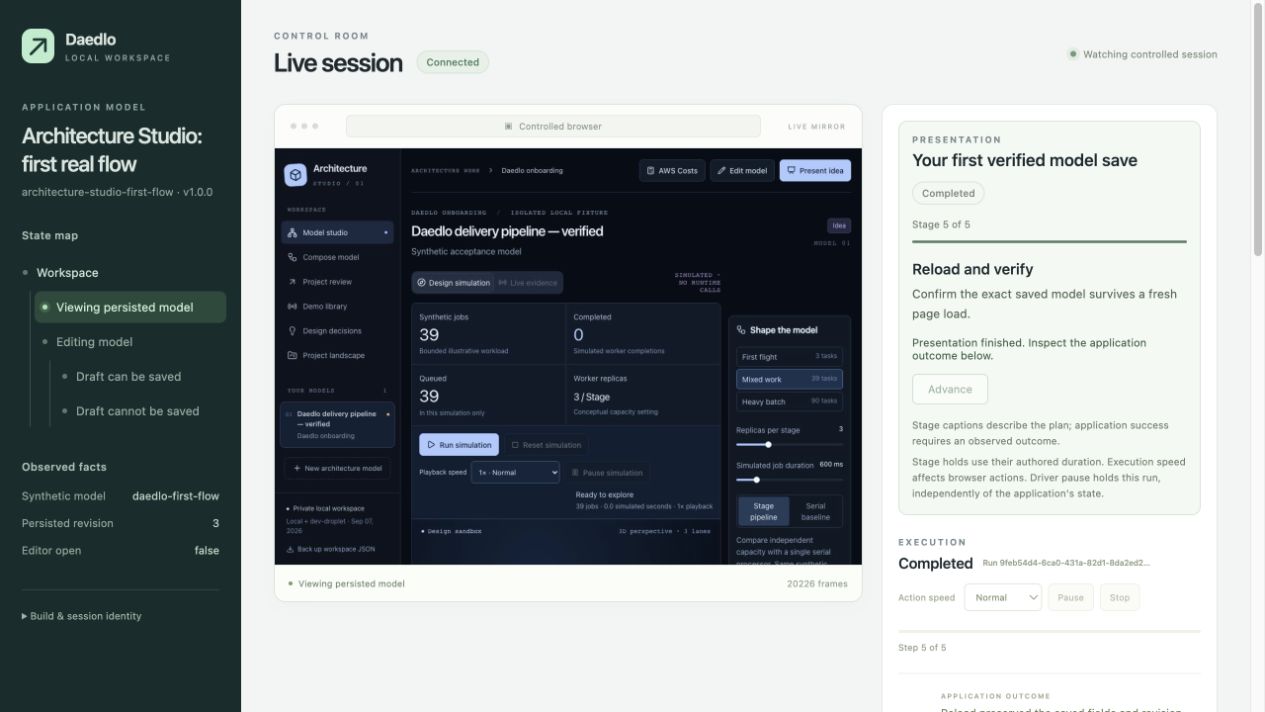
The editor and persistence are real application behavior, tested with disposable synthetic data. Architecture Studio’s topology is an authored 3D simulation; its simulated jobs and performance are outside this check.
02 / LOOK PAST THE CLICK
The presentation made one PUT request. HTTP 200, response, API and disk agreed on the exact saved values. Revision advanced from 2 to 3.
An empty name entered the invalid state. Save and Reload were unavailable. Zero PUT requests; the revision stayed unchanged.
After reload, reopening the editor verified the actual name and notes against the persisted values, without another write.
13 Rust checks + 7 Node checks passed. The browser flow and persistence checks provide separate evidence of the real application outcome.
Verified03 / OPEN IT AGAIN
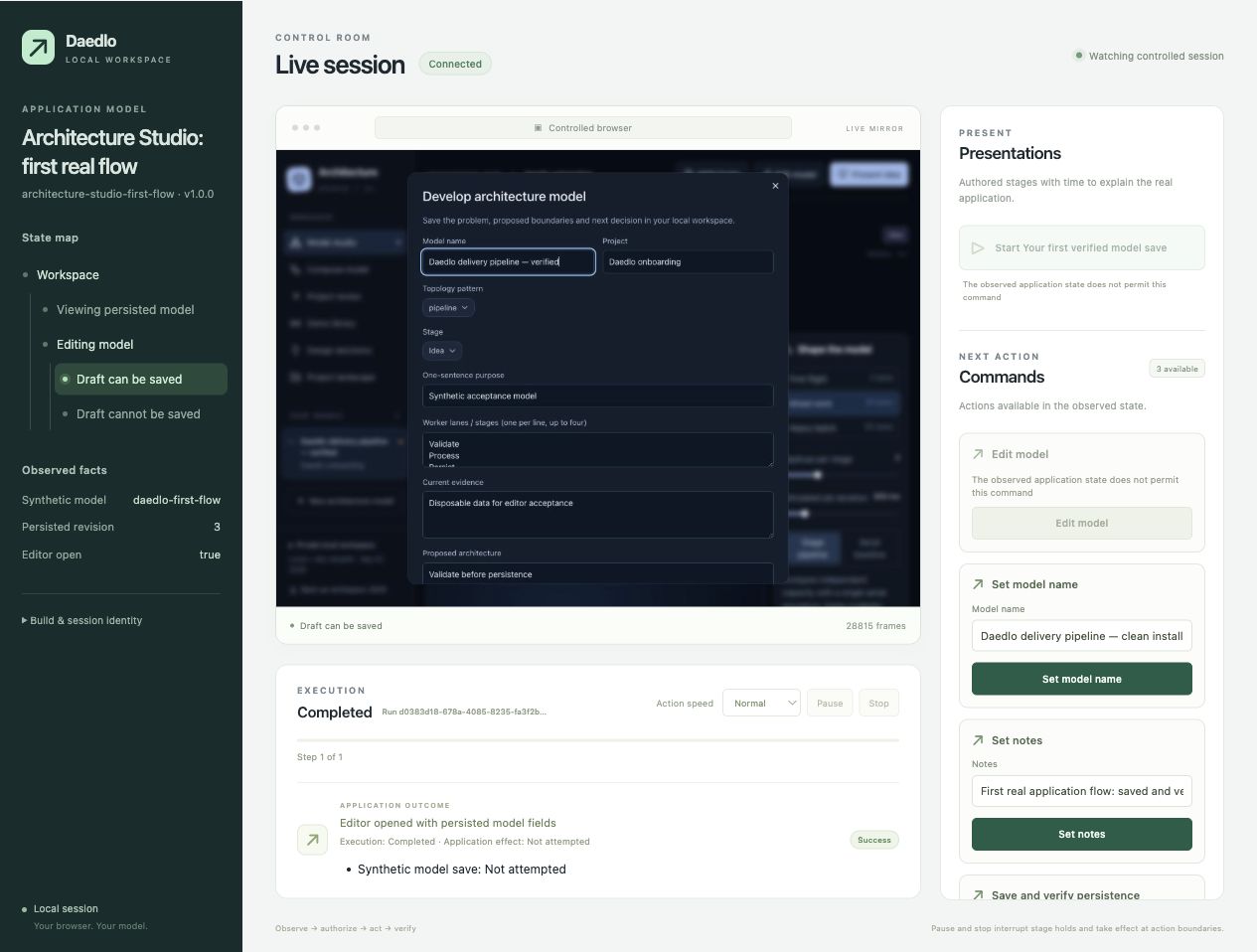
Exact values verified by the check
The outcome confirms both fields in the reopened editor. The screenshot shows the name and result; the notes field is below the captured editor viewport.
THE INSTALLATION BEHIND THE RUN
The downloaded ZIP matched its published SHA-256. We installed the runtime, Chromium and Rust dependencies into new, empty caches, using existing Node.js 22.20.0 and Rust 1.96.0 toolchains. The public runtime, engine crate and tools stayed unchanged.
A customer-authored Rust state model and JavaScript adapter connected this application. The first run exposed integration issues around readiness, selectors, invalid input and observing a save; those were corrected and checked before this completed run.
This is one verified flow on macOS arm64. Linux, Windows and Claude Code remain unverified for this acceptance. A clean OS installation, automatic skill discovery, independent human onboarding, concurrent editors and injected save failures were not tested.
YOUR APPLICATION. YOUR DEFINITION OF WORKING.
Download the kit, give your coding agent the bundled instructions, and connect a small feature you already understand.